With so many rendering options available, choosing the right finish for your project can feel overwhelming. This comprehensive guide breaks down the main types of render to help you make an informed decision, whether you're building new, renovating, or restoring an existing property in NSW.
## Cement Render
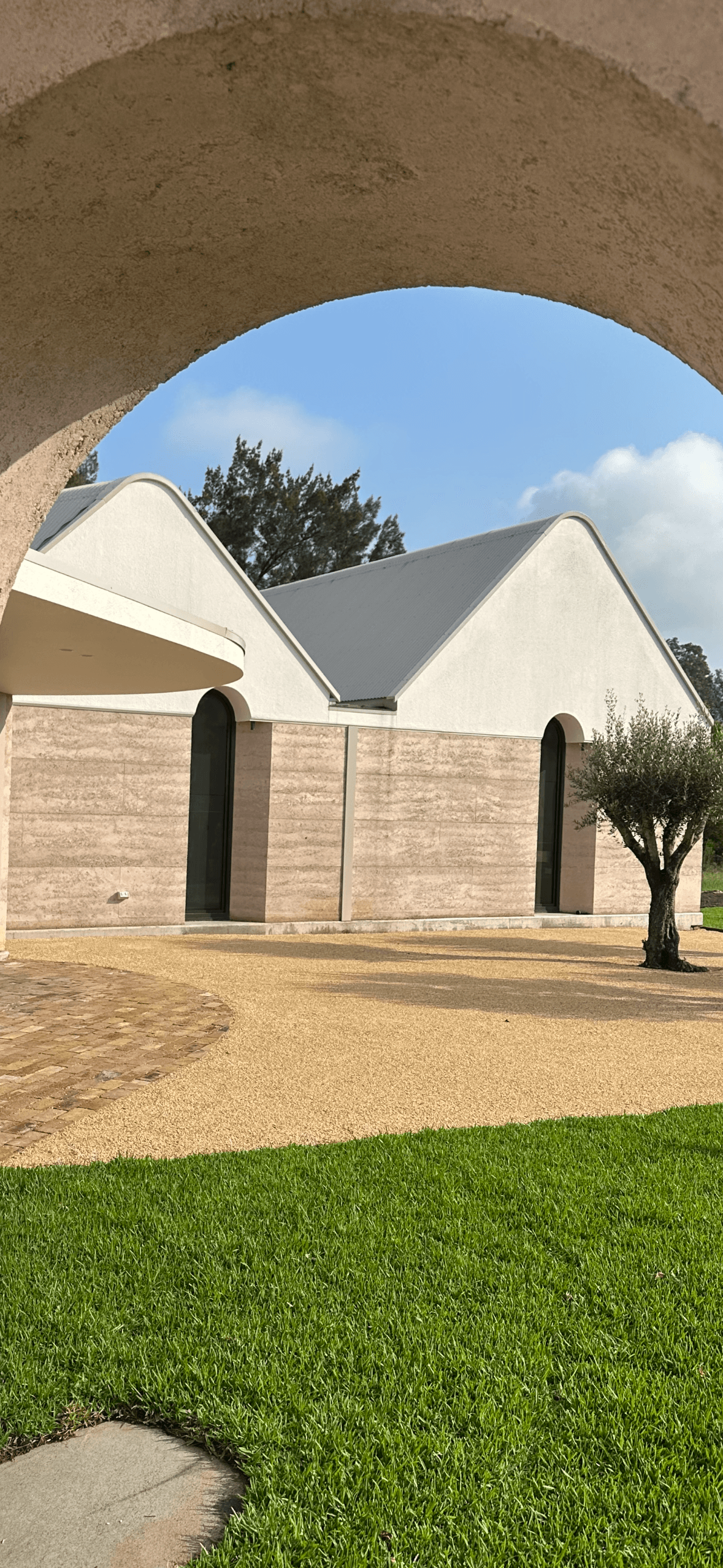
The traditional choice, cement render consists of sand, cement, and lime mixed with water. It's cost-effective and provides excellent durability for external walls. Cement render is applied in two or three coats - a scratch coat for adhesion, a levelling coat for a flat surface, and a finish coat for the final texture.
Cement render's main advantage is its strength and affordability. At $30-$60 per square metre, it's the most budget-friendly option. It also provides good fire resistance, making it suitable for bushfire-prone areas common around Sydney's urban fringe and the Central Coast hinterland.
The trade-off is that cement render is rigid - it doesn't flex with building movement, which can lead to hairline cracking over time, particularly in areas with significant temperature variations. It also requires painting, which adds to the initial cost and means ongoing repainting every 7-10 years. Best suited for: budget-conscious projects, areas with stable temperatures, surfaces that will be painted, and fire-prone zones.
## Acrylic Render
Modified with polymer additives, acrylic render offers superior flexibility and crack resistance compared to cement. It comes pre-coloured, eliminating the need for painting. The polymer content allows the render to flex slightly with building movement, dramatically reducing the likelihood of cracking.
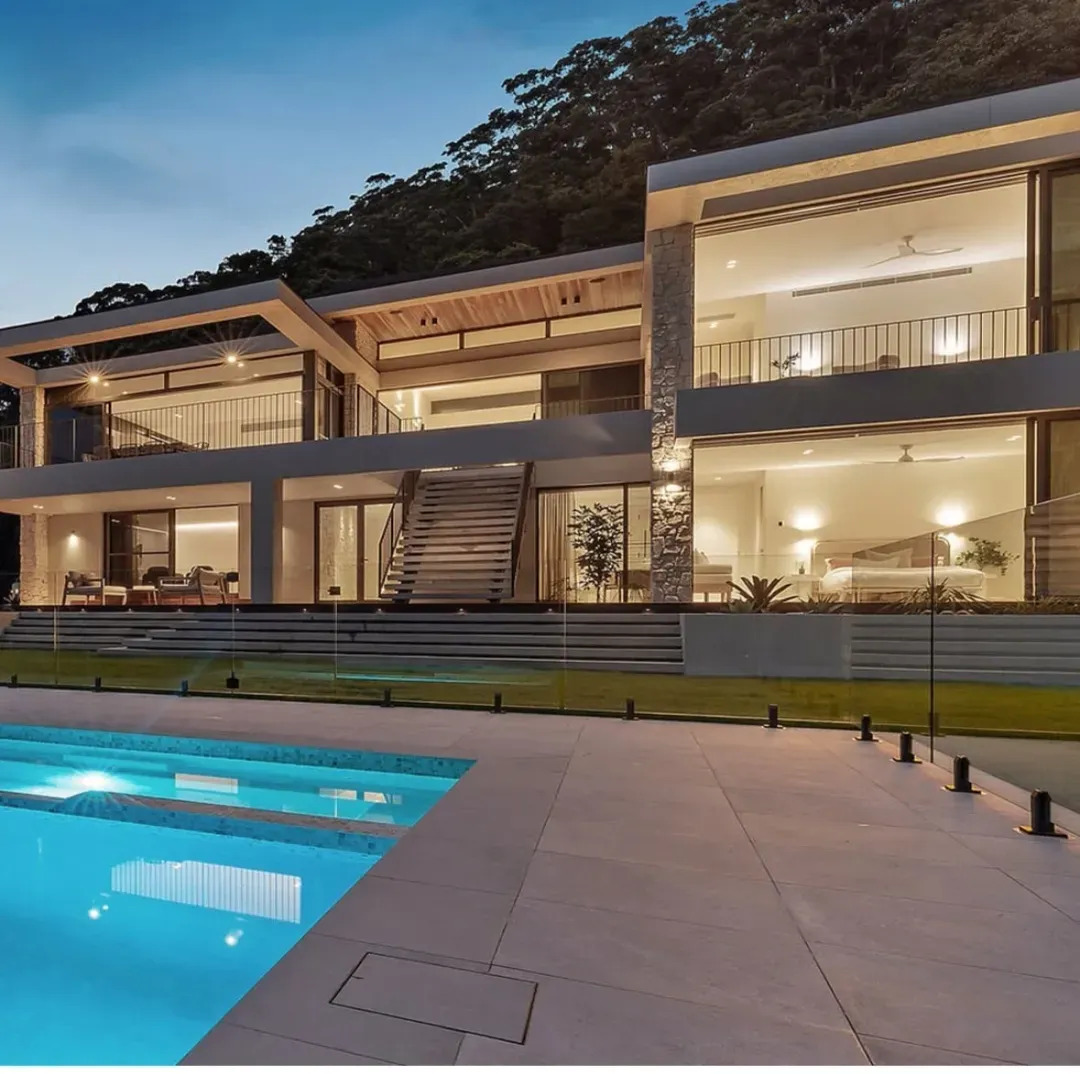
Acrylic render is the workhorse of modern Australian rendering. It handles our harsh UV exposure, temperature swings, and coastal conditions better than any other exterior option. The pre-mixed colour means no painting is required - the colour is consistent throughout the material, so minor chips or scratches are far less visible than on painted cement render.
Available in a wide range of textures - from smooth 'float' finishes to coarser 'sand' and 'bag' textures - acrylic render can achieve almost any exterior aesthetic. At $45-$80 per square metre, it costs more upfront than cement but saves significantly on painting and maintenance over its lifetime. Best suited for: Australian climates with temperature extremes, coastal areas, modern homes seeking low maintenance.
## Texture Coatings
These are acrylic-based finishes that can be applied over existing render or directly to prepared substrates. They offer a wide range of textures from fine sand to coarse aggregate. Texture coatings are particularly useful for renovation projects where the existing substrate has minor imperfections that need concealing.
Texture coatings bridge the gap between a full re-render and a simple repaint. They're thicker than paint (typically 1-3mm) but thinner than a full render system (10-15mm). This makes them ideal for refreshing tired-looking exteriors without the cost and disruption of a complete rendering job. Best suited for: renovation projects, concealing surface imperfections, achieving specific aesthetic effects.
## Venetian Plaster
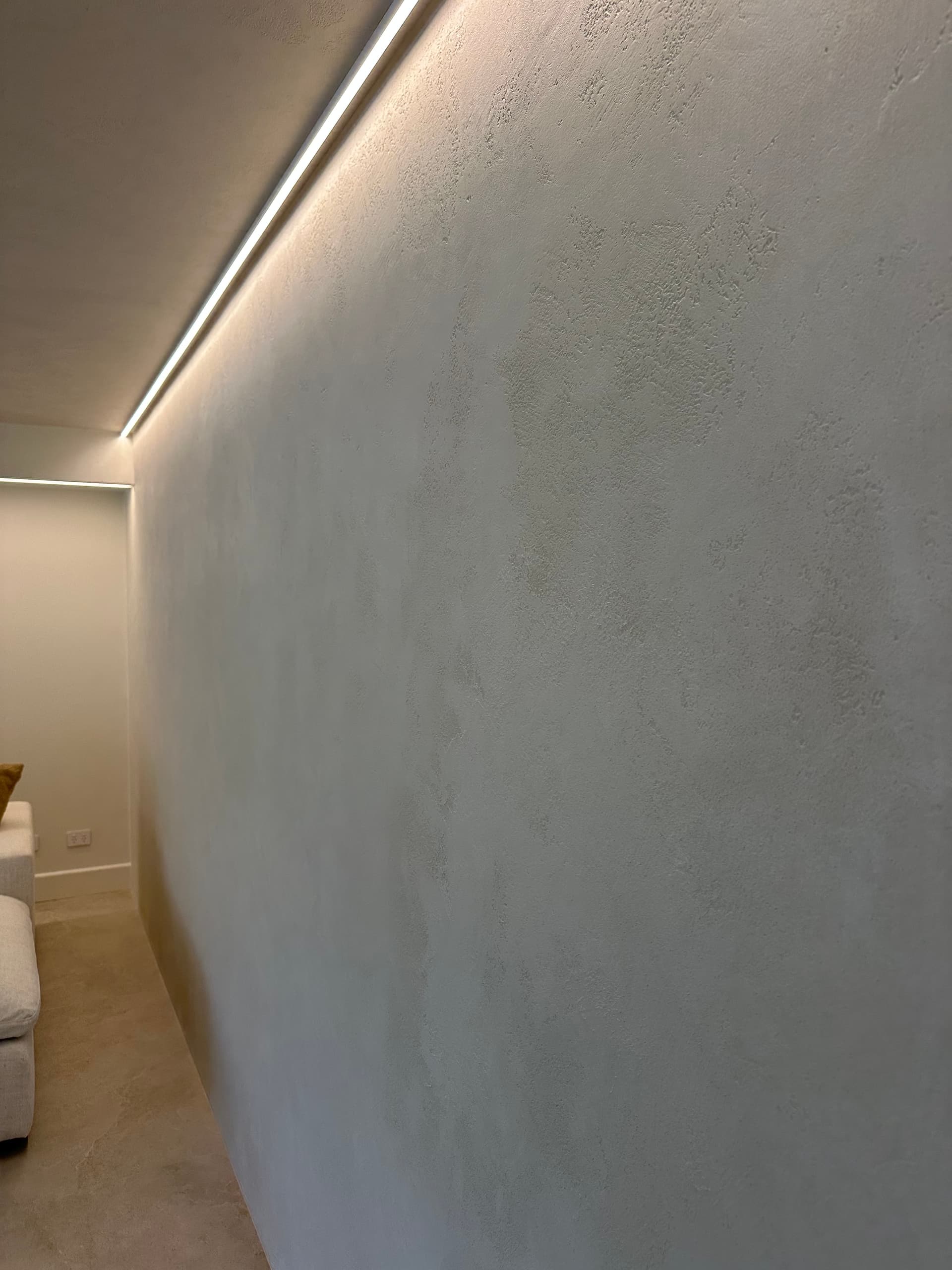
A lime-based decorative finish that creates a polished, marble-like appearance. Primarily used for interior walls where a luxurious finish is desired. Venetian plaster is applied in multiple thin layers, each burnished to build up depth, luminosity, and that distinctive marble-like sheen.
The investment ranges from $120-$250 per square metre, reflecting the skill and time required for application. However, Venetian plaster lasts 20-40 years, making it more cost-effective than it initially appears. It's breathable, hypoallergenic, and gets harder over time through a natural carbonation process. Best suited for: feature walls, high-end interiors, spaces where natural materials are preferred.
## Microcement
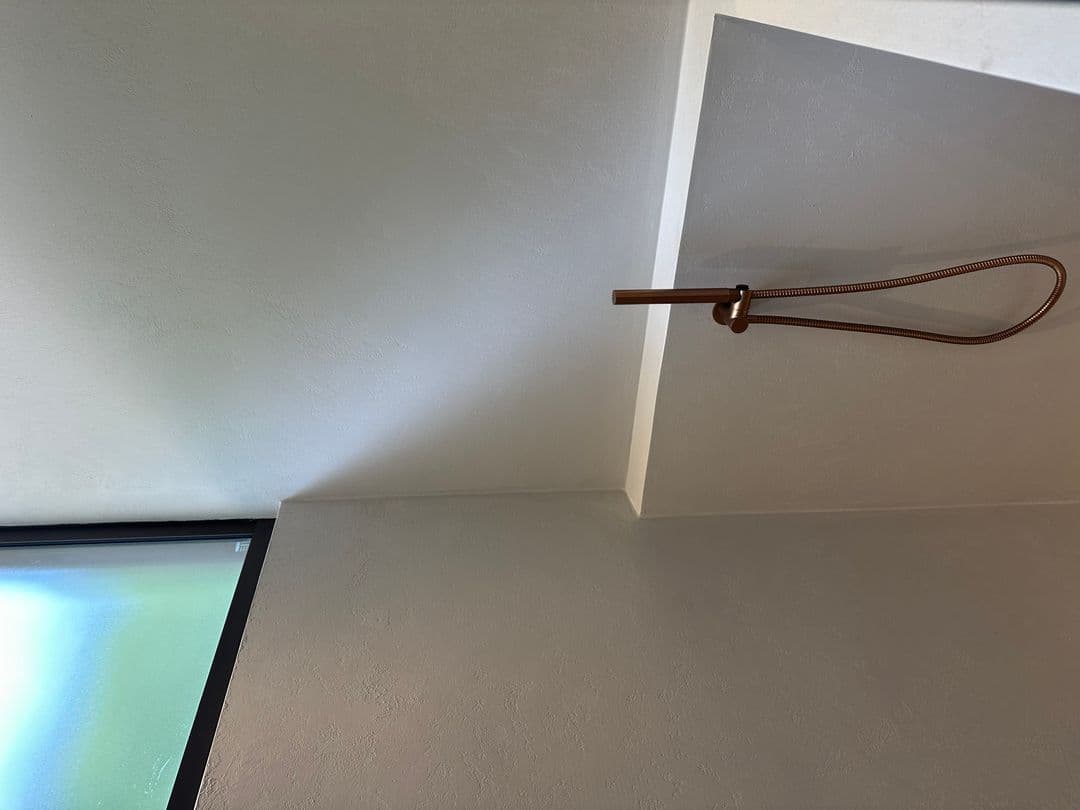
A thin polymer-modified coating that can be applied over almost any surface at just 2-3mm thickness. Creates seamless, contemporary finishes for both interiors and exteriors. The ability to apply over existing tiles, concrete, and timber makes microcement a renovation game-changer - no demolition, less waste, and faster completion.
Microcement's seamless finish eliminates grout lines, making it more hygienic than tiles and easier to clean. It's waterproof when properly sealed, making it suitable for showers, bathrooms, and even swimming pool surrounds. Costs range from $150-$300 per square metre depending on the area and complexity. Best suited for: bathrooms, renovations over existing tiles, modern minimalist design, and creating flow between indoor and outdoor spaces.
## How to Choose: A Decision Framework
Factors to consider when choosing your render: Location (interior vs exterior), climate conditions, existing substrate, desired aesthetic, maintenance requirements, and budget all play a role in selecting the right render. Here's a practical framework to narrow your options.
For exterior walls on a budget, cement render with quality paint is hard to beat. If you want less maintenance long-term, upgrade to acrylic. For coastal properties, acrylic is almost always the right choice due to its salt resistance and flexibility.
For interior feature walls and luxury spaces, Venetian plaster creates the most dramatic impact. For bathrooms and wet areas, microcement provides a seamless, contemporary alternative to tiles. For full interior renovations where you want continuity between rooms, microcement creates beautiful flowing spaces.
## Climate Considerations for NSW
In Sydney and coastal areas, salt air and humidity make acrylic renders the dominant choice for exteriors. The flexibility handles the expansion and contraction from warm days and cool nights, while the salt resistance protects against the marine environment.
The Central Coast's varied climate - coastal humidity at Terrigal, slightly drier conditions inland around Erina - suits flexible renders that can handle these variations. Many Central Coast homes also face bushfire risk in hinterland areas, where cement render's fire resistance becomes an important factor.
Newcastle's industrial heritage means many properties benefit from remedial rendering before new finishes can be applied. Older cement render may need patching, and heritage properties often require lime-based renders that are sympathetic to the original construction. Understanding the existing substrate is crucial for Newcastle projects.
## Frequently Asked Questions
Can I render over existing tiles? Yes, microcement is specifically designed for this application. With proper priming and surface preparation, microcement adheres strongly to existing tiles, creating a seamless surface without demolition. This is one of the most popular renovation techniques we offer.
How long does each type of render last? Cement render lasts 15-25 years (longer with good maintenance), acrylic render 20-30 years, Venetian plaster 20-40 years, and microcement 15-25 years. All of these lifespans assume professional application and reasonable maintenance.
Which render is best for a beachfront property? Acrylic render for exteriors, hands down. Its flexibility, pre-mixed colour, and salt resistance make it the ideal choice. For interiors of beach homes, microcement creates the seamless, relaxed aesthetic that suits coastal living perfectly.
Can different render types be used on the same property? Absolutely - and we recommend it. Many of our projects combine acrylic render on the exterior with microcement in bathrooms and Venetian plaster on interior feature walls. Using the right finish for each application ensures the best performance and aesthetic across your entire home.
At FineTex Finishes, we offer all these rendering options and can provide expert advice based on your specific situation. Book a free consultation to discuss which finish will best meet your needs and budget.